Window Shade Measuring Guide
Accurate measurements are essential to make custom blinds fit cleanly and operate correctly. This Zenith Shade guide helps you prepare for measuring Roller Blinds, Zebra Blinds, Cellular Blinds, and motorized options.
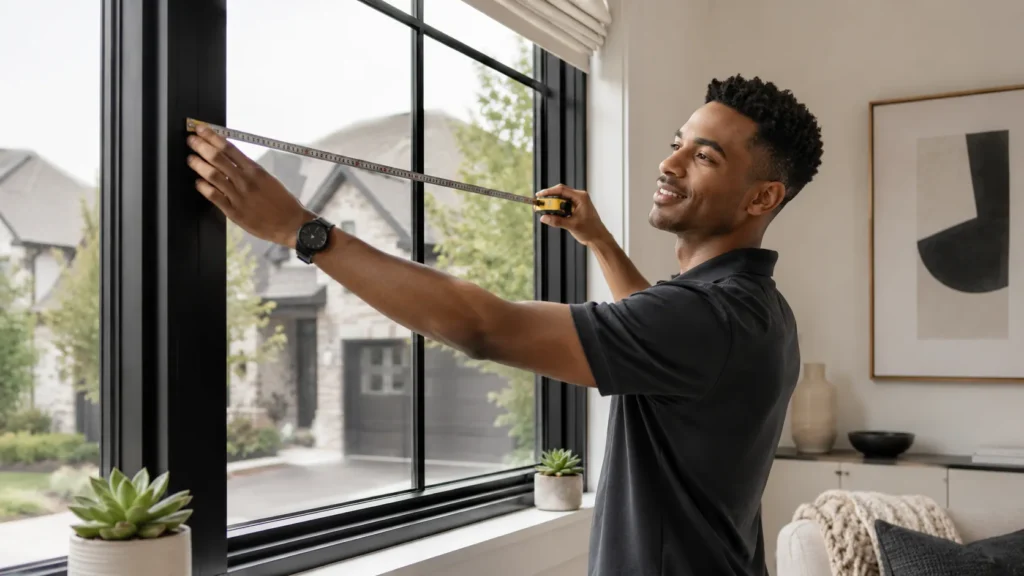
Before measuring, have a steel tape or laser measure, pencil, notepad, and photos of the window area ready. Measure to the nearest 1/16 inch and record width, height, depth, handles, trim, and obstructions.
Download or use this page as a worksheet when preparing for your consultation.
General Measuring Tips
Use a Steel Measuring Tape
Flexible fabric tapes can stretch, leading to inaccurate measurements.
Measure to the Nearest 1/16 Inch
Round down only when final product guidance calls for it. Keep raw measurements precise.
Record the Width and the Height
Measure at the top, middle, bottom, left, center, and right where relevant.
Consider Obstructions
Account for handles, locks, cranks, trim, baseboards, and furniture near the window.
Choosing Between Inside and Outside Mount
for Window Shades
Characteristics of Inside Mount
- Creates a seamless, integrated look inside the window opening.
- Requires enough flat mounting depth for the selected product and hardware.
- Can leave a small side light gap depending on fabric and product type.
Decide on hardware clearance:
Confirm whether the blind will be open roll, cassette, fascia, cellular headrail, or motorized. The available flat depth affects what can be installed cleanly.
Obstructions:
Window cranks, handles, locks, mullions, and tilt hardware can interfere with fabric travel or bottom rail movement.
Width and height:
Measure the inside width at top, middle, and bottom. Record the narrowest width. Measure height at left, center, and right.
Characteristics of Outside Mount
- Provides more flexibility when interior window depth is limited.
- Can visually enlarge the window and improve coverage over uneven frames.
- Can reduce side light gaps by adding overlap around the opening.
Decide on coverage:
Measure the full area you want covered, including frame, trim, and privacy overlap. Many rooms benefit from 1.5 to 3 inches of overlap on each side.
Obstructions:
Check ledges, handles, nearby walls, door swing, and trim projection. Motorized or reverse-roll planning may help selected windows.
Width and height:
Record total finished coverage area and note whether the blind should cover trim or only glass.
Special Applications
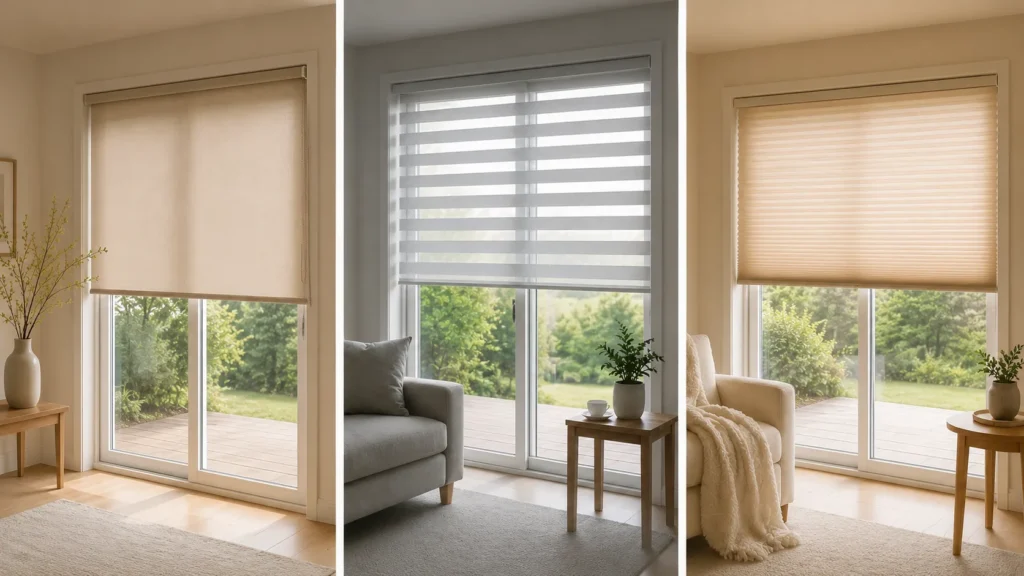
Patio Doors
Patio doors require shades that allow for easy access and movement. Sliding doors often need split coverage or grouped operation.
- Measure the entire width of the door including trim if outside mount is planned.
- Measure from the top frame to the floor or desired finished height.
- Note handle clearance, traffic direction, door lock location, and whether motorization would help.
Bay Windows
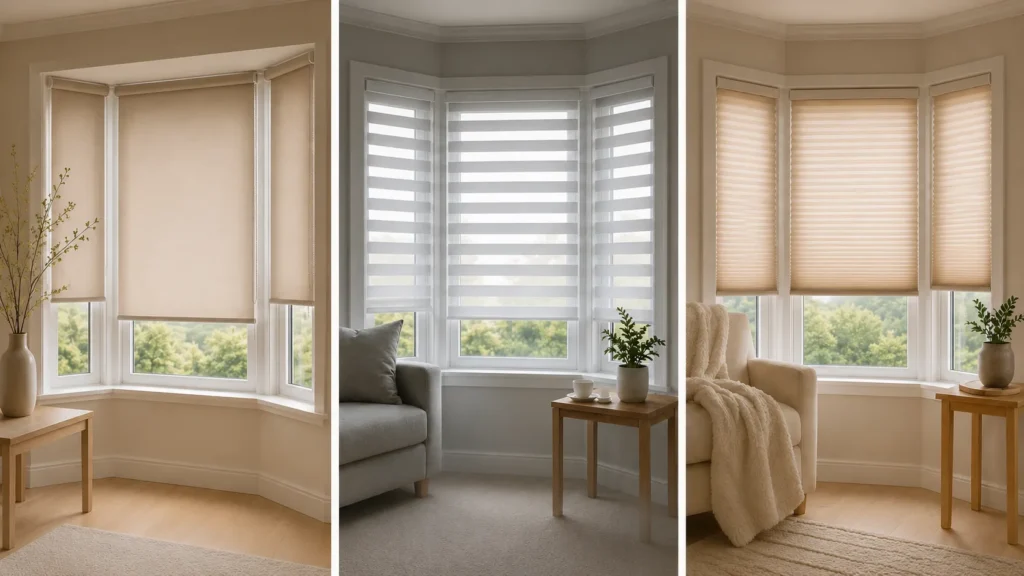
Bay windows involve multiple angled sections, requiring individual measurements for each opening.
- Measure each window width separately at top, middle, and bottom.
- Measure height for each section and record the smallest usable height.
- Confirm adjacent blinds can operate without interfering with each other.
| Valance / Hardware | Approx. planning depth |
|---|---|
| Open roll | about 3 in |
| Compact cassette | about 3 1/2 in |
| Fascia | about 3 1/2 to 4 3/8 in |
| Cellular headrail | about 2 to 2 1/2 in |
| Motorized roller hardware | confirm motor and bracket depth |
| Zebra cassette | confirm cassette depth before order |
French Doors
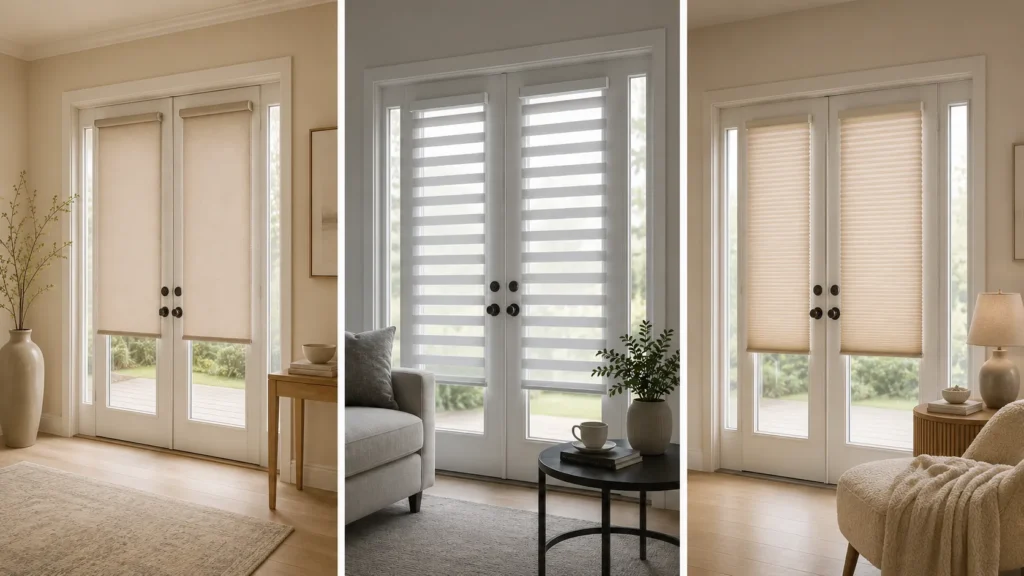
French doors often have handles or levers that can interfere with shade movement.
- Measure glass width and height, then review desired overlap.
- Check handle projection and bottom rail clearance.
- Outside mount is often reviewed when depth or handle clearance is limited.
| Consideration | Instruction |
|---|---|
| Door mechanism | Confirm blind and bottom rail do not interfere with door swing. |
| Door handle | Check handle projection and fabric clearance before choosing mount. |
| Glass coverage | Add planned overlap where privacy or light control matters. |
| Mounting surface | Confirm screws and anchors suit door, mullion, drywall, or tile. |
| Control side | Keep chains, remotes, and wall controls clear of daily door use. |
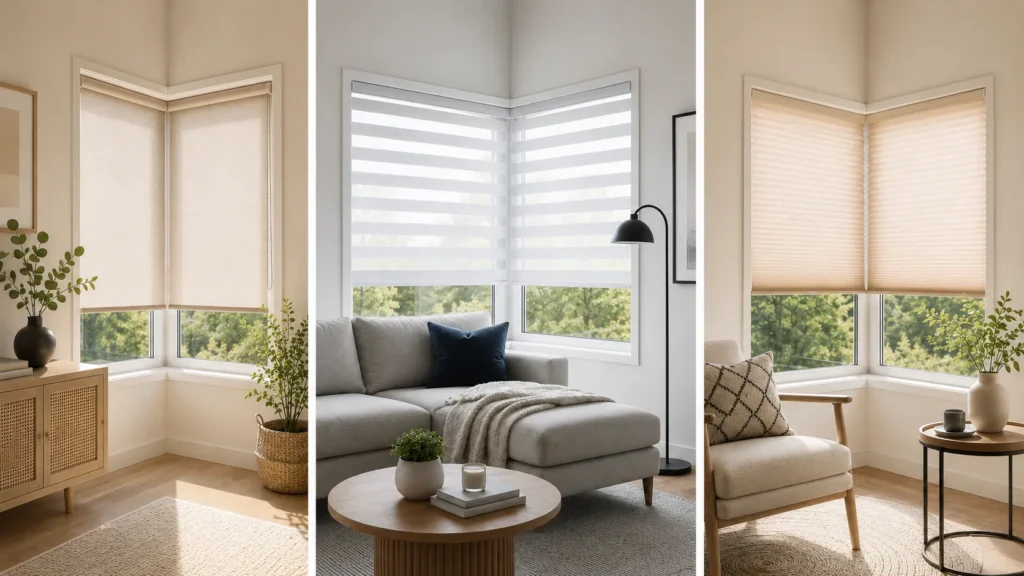
Corner Windows
Corner windows need precise planning to prevent product collision and coverage gaps.
- Measure primary and secondary windows as separate zones.
- Subtract or account for hardware depth where two blinds meet.
- Confirm both blinds can operate independently without obstruction.
| Hardware | Approx. depth to discuss |
|---|---|
| Open roll | about 3 in |
| Compact cassette | about 3 1/2 in |
| Fascia | about 3 1/2 to 4 3/8 in |
| Cellular headrail | about 2 to 2 1/2 in |
| Zebra cassette | confirm final selected system |
| Motorized option | confirm motor clearance and wiring/access |
Low Depth Windows
Low-depth windows may require outside mount or lower-profile hardware.
- Measure frame depth as carefully as width and height.
- Check whether there is enough flat mounting surface for brackets.
- Review cassette, fascia, open roll, cellular headrail, and motor options before ordering.
| Window condition | Planning direction |
|---|---|
| Very shallow frame | Review outside mount first. |
| Some flat depth | Confirm exact hardware depth before product choice. |
| Handles or cranks | Review reverse roll, projection, or outside mount. |
| Condos / metal frames | Confirm drilling permissions and mounting surface. |
| Blackout goal | Discuss light gaps before finalizing mount. |
Final Tips
Double-Check Measurements
Always double-check your measurements before approving an order.
Consider Hardware and Accessories
Account for trim, casing, handles, control side, power access, and any hardware that may affect operation or installation.
Consult with Our Specialists
If your windows are complex, bring photos and rough measurements to Zenith Shade for product and mount guidance.
Other Helpful Guides
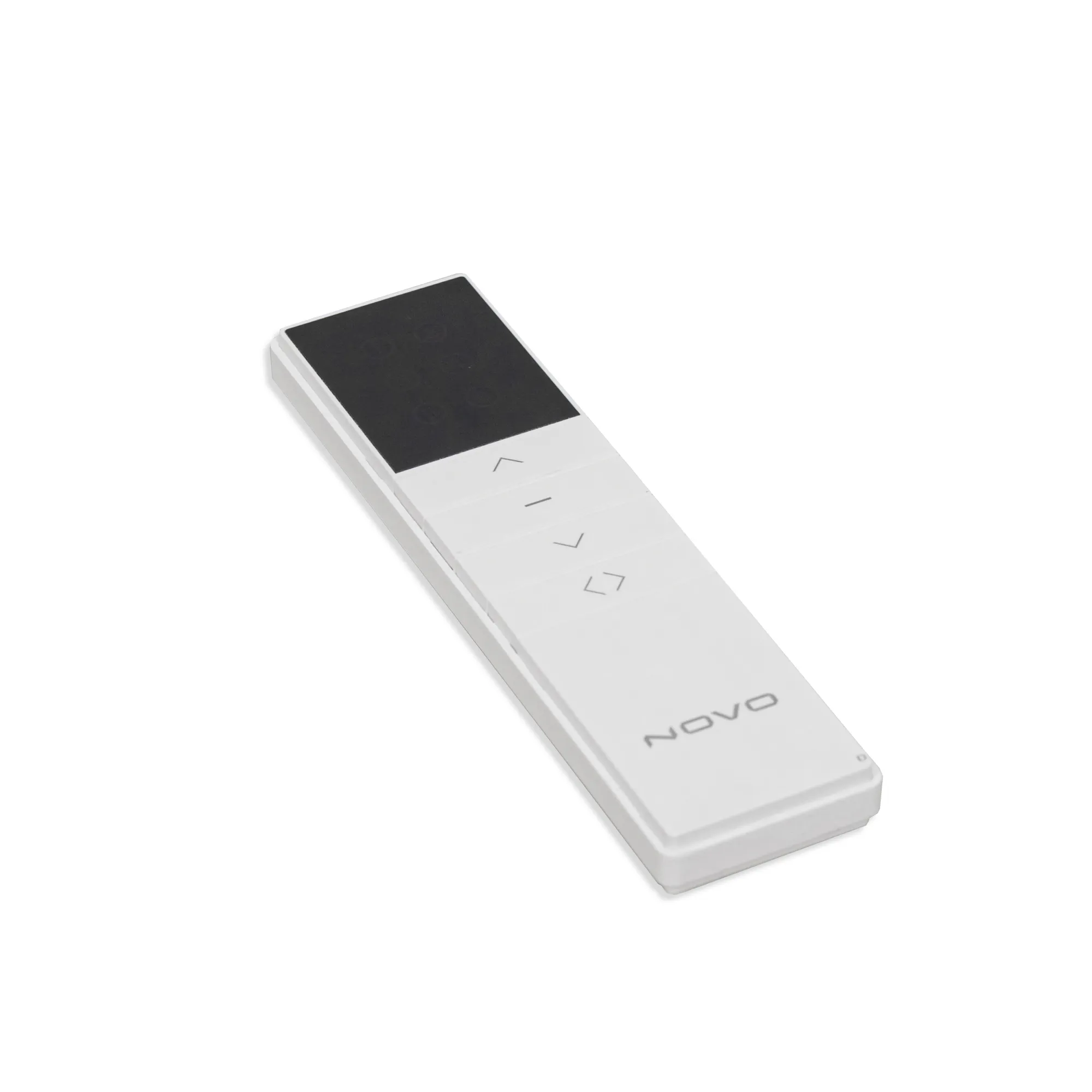
Motorized Blinds Guide
Plan remote, app-ready, timer, and smart-home-ready control options.
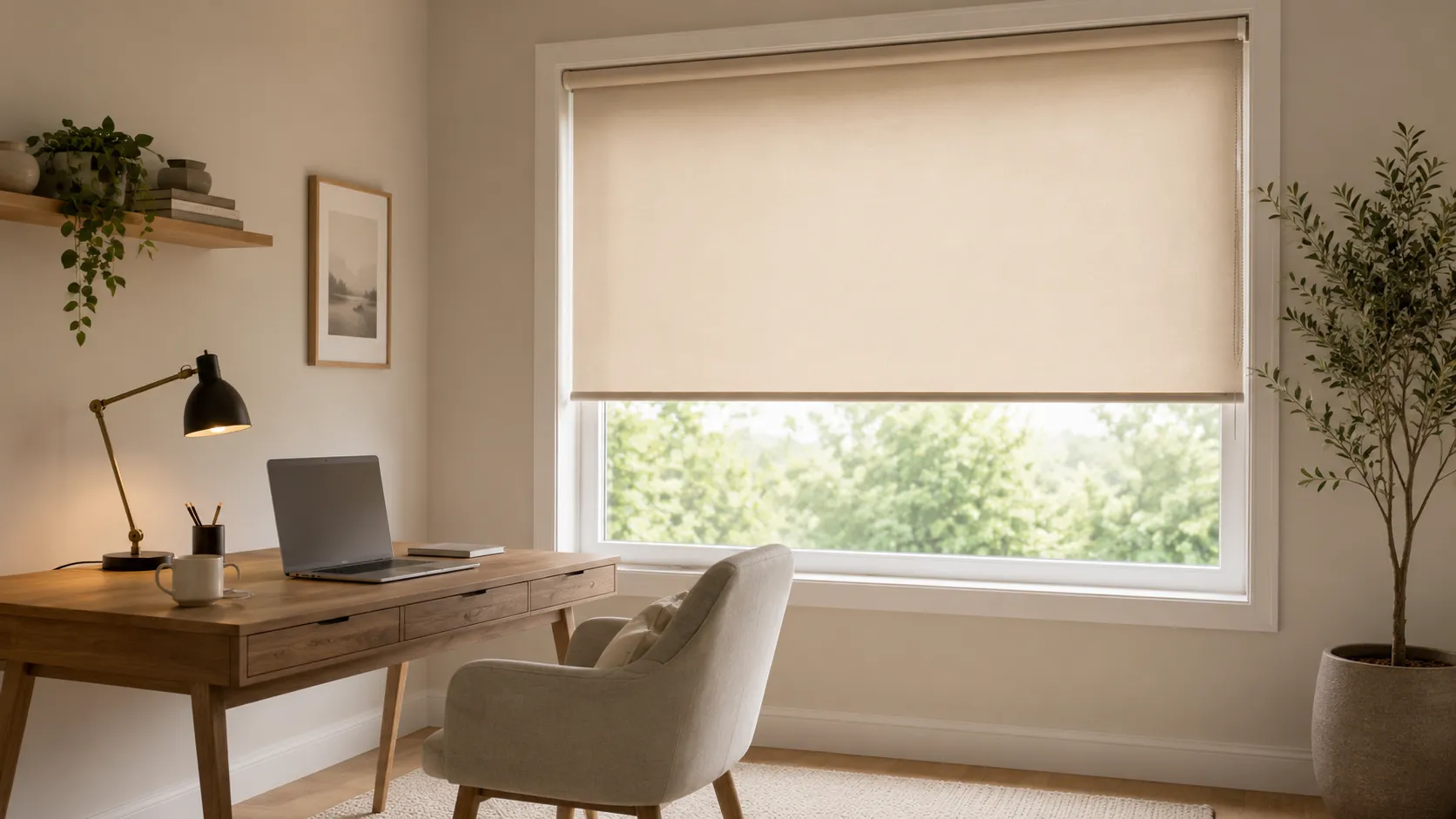
Light Control and Privacy Guide
Compare privacy, filtering, blackout, glare, and room comfort goals.
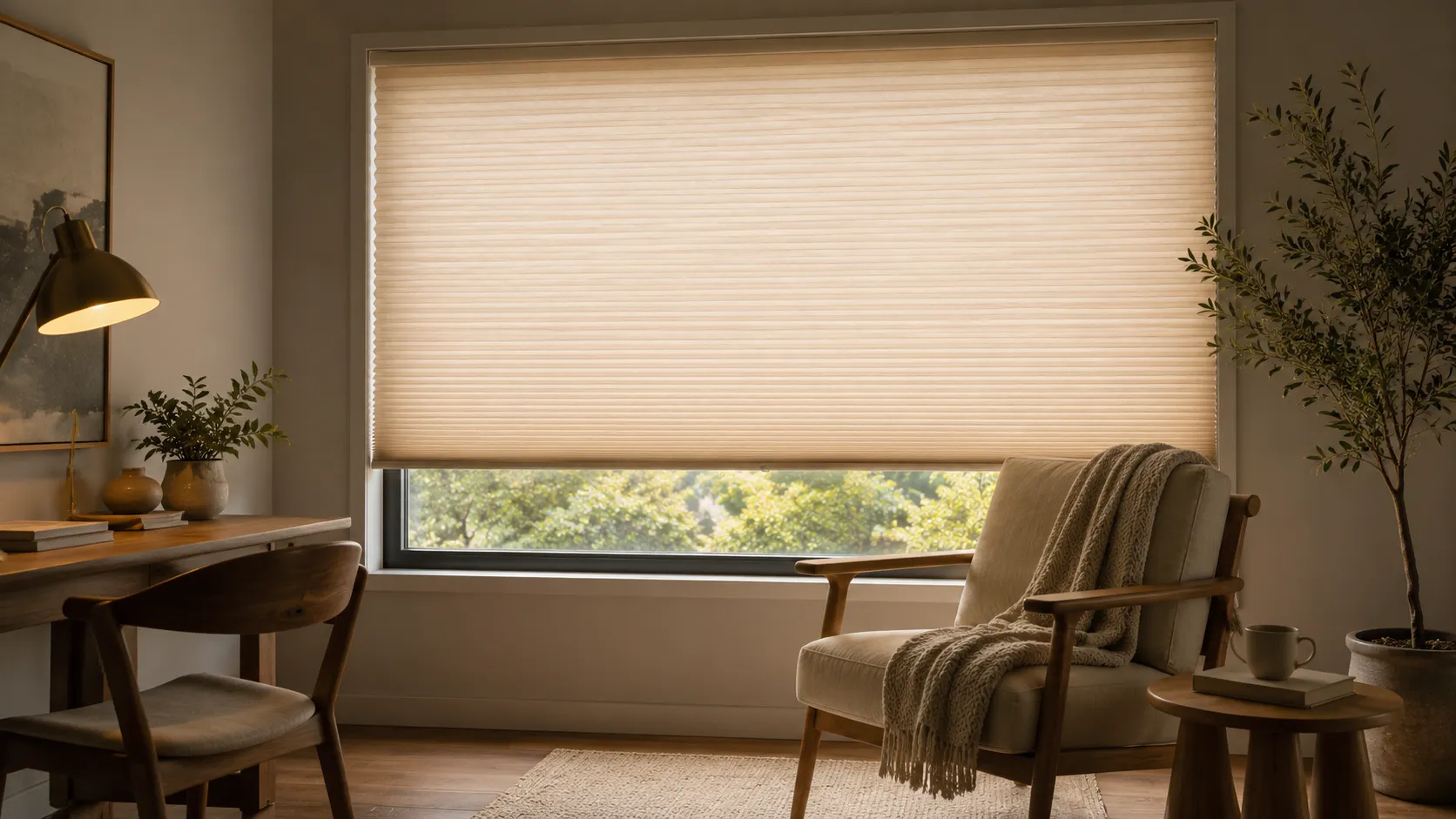
Cellular Comfort Guide
Understand insulation comfort, soft light, and privacy planning.
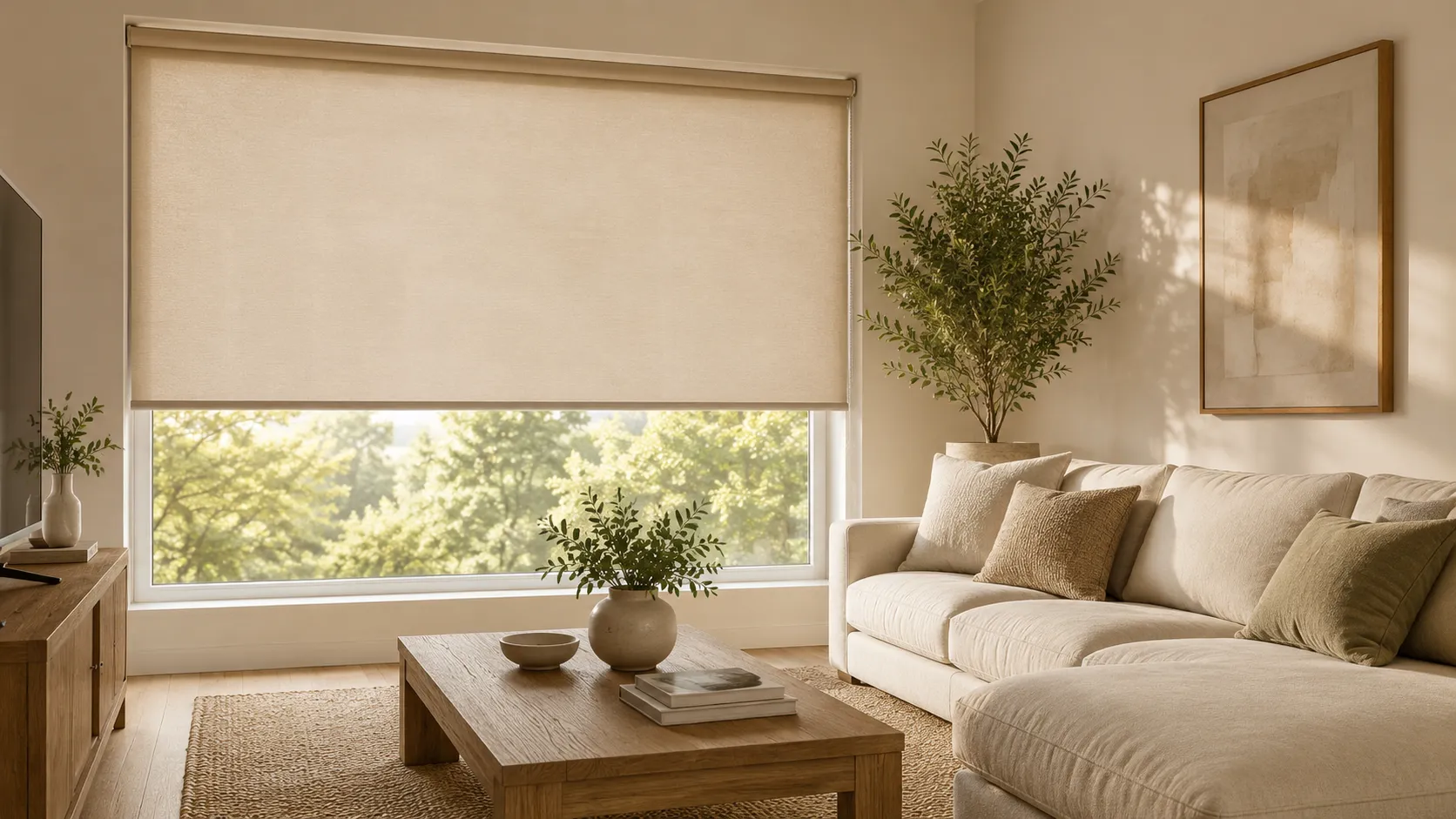
Roller Blind Fabric Guide
Review solar screen, light filtering, dimout, blackout, and texture options.
Let’s Find the Right Blinds for Your Space Space
Tell us about your rooms and what you need — privacy, light control, or motorization — and we’ll recommend the perfect fit from our Roller, Zebra, and Cellular collections.