If the blinds in your home still have a dangling cord, you’re not alone — and you’re also not fully protected. Health Canada’s Corded Window Coverings Regulations (CWCR) have been in force since 2021, yet government testing keeps turning up non-compliant products on Canadian shelves years later, including several recalls in 2026 alone. For homeowners in Ottawa, Montréal, and across the country, that’s a good reason to look closely at what’s actually hanging in the nursery, playroom, or bedroom window — and what genuinely compliant cordless blinds Canada shoppers can trust should really look like.
This guide breaks down what the regulation actually requires, what recent enforcement data shows, and how to choose custom window blinds that are safe by design, not just by label.
Why Corded Blinds Are Still a Real Safety Risk
Loose or looped cords on traditional blinds remain one of the most persistent hidden hazards in Canadian homes. A child can pull a free-hanging cord around their neck in seconds, and because it usually happens quietly near a crib, change table, or window seat, parents often don’t realize the risk until it’s pointed out. This is precisely why Health Canada moved away from voluntary guidelines and introduced binding regulations: cords attached to window coverings have caused documented child strangulation incidents across North America for decades, and design alone — not parental supervision — was found to be the only reliable fix.
What the Corded Window Coverings Regulations Actually Require
The CWCR came into force on May 1, 2021, with a one-year transition period before Health Canada began actively enforcing it on May 1, 2022. The rules apply to every corded window covering sold in Canada — custom-made and off-the-shelf, domestically manufactured and imported, department-store blinds and made-to-measure shades ordered from a local dealer. There’s no exemption for small manufacturers, custom orders, or products bought online from outside Canada once they’re sold to a Canadian consumer.
In practical terms, the regulation limits:
- Cord length — any free-hanging or tethered cord is capped at roughly 22 cm, about the length of a pencil.
- Loop size — no cord, including inner lift cords, can form a loop larger than about 44 cm in circumference.
- Small parts — end caps, clips, and other hardware must be secured well enough that they can’t be pulled off and become a choking hazard.
- Labelling and information — products must carry accurate safety information for the retailer and consumer.
In effect, this pushed the entire industry toward cordless blinds, continuous chain-and-clutch systems with tensioned mounts, and motorized operation — rather than the old exposed pull-cord and wand designs many of us grew up with. That’s also why “cordless blinds” has become the default recommendation in nearly every Health Canada recall notice, rather than a niche upsell.
The Recalls Haven’t Stopped — Even in 2026
Five years after the CWCR took effect, Health Canada is still issuing recalls on a near-monthly basis. Enforcement data gives a sense of scale: in the 2022–2023 fiscal year, inspectors tested 38 corded window covering products and found enough non-compliance to trigger 16 recalls covering 24 products, plus several stop-sale and stop-distribution orders. The following year, 44 products were tested and 30 recalls followed — nearly all of them for strangulation or choking hazards that shouldn’t exist under the current rules.
2026 has followed the same pattern. Health Canada recalls this year have covered corded zebra shades, roller blinds, and cellular shades from a mix of Canadian manufacturers and importers — some sold as recently as this spring, well after the CWCR had been in force for years. The Consumers Council of Canada noted in May 2026 that several of the year’s recalled products were manufactured well after the safety requirements were updated, meaning non-compliance isn’t only a leftover-inventory problem left over from before 2021; it’s an ongoing one.
The hazards behind these recalls tend to fall into two categories. Most involve looped or free-hanging cords long enough for a child to pull around their neck — the exact scenario the CWCR was designed to prevent. Others involve small hardware, like bottom-rail end caps, that aren’t securely fixed and can come loose as a choking hazard. Both issues are manufacturing and design failures, not something a homeowner could reasonably catch by looking at a product on a showroom wall.
The practical takeaway for Canadian homeowners: a product being available for sale — in a big-box store, a marketplace listing, or even a small local shop — is not proof that it meets the regulation. Compliance has to be confirmed, not assumed.
Are Your Current Blinds Actually Compliant? A Quick Self-Check
Walk through your home and check each window covering against this list:
- Any free-hanging or tethered cord that looks longer than a pencil (roughly 22 cm)
- Older continuous-loop cords — common on vertical blinds and older cellular shades — without a wall-mounted tension device installed
- A pull wand or chain that isn’t held taut by a cleat or tension bracket near the floor or sill
- Blinds purchased before 2021 that have never been inspected or retrofitted
- No documentation from the retailer confirming the product meets the CWCR
If two or more of these apply — especially in a bedroom, nursery, playroom, or any room where young children spend time — it’s worth treating replacement as a safety upgrade rather than just a style refresh.
Which Rooms to Prioritize First
If you’re planning a gradual replacement rather than doing the whole house at once, safety data points clearly to where to start:
- Nurseries and young children’s bedrooms — cribs and beds are frequently placed near windows, putting cords within reach during unsupervised moments like naps and overnight sleep.
- Playrooms and family rooms — furniture gets rearranged often in these spaces, which can bring a window closer to floor level than it was when the blinds were first installed.
- Rental units and multi-generational homes — grandparents’ homes, basement apartments, and short-term rentals often keep older window coverings the longest, since replacement isn’t always top of mind until a young child is visiting or moving in.
Even if a full-home upgrade isn’t in the budget this year, addressing these rooms first closes the highest-risk gaps immediately.
Cordless and Motorized Options Built for Canadian Homes
Every core product line at Zenith Shade is available as cordless blinds, so compliance isn’t something you have to research separately from style and function:
- Roller Blinds — a clean single-panel design available with a tensioned chain-and-clutch system or fully cordless spring lift.
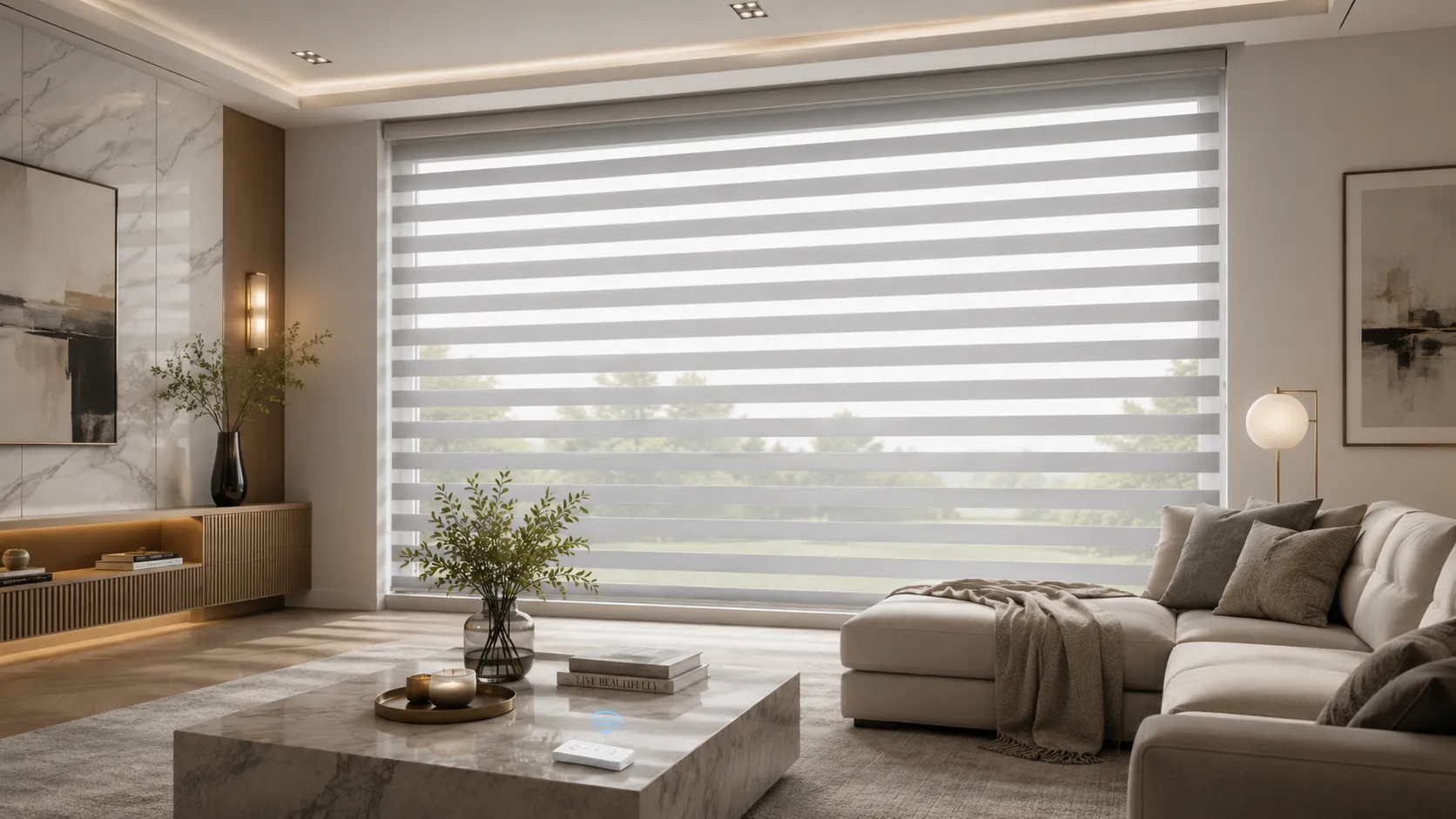
- Zebra Blinds — layered sheer and solid bands for adjustable privacy, with the same cordless and motorized control options.
- Cellular Blinds — honeycomb insulating shades, well suited to bedrooms and nurseries where both safety and energy efficiency matter.
- Motorized Blinds — remote, app, or voice control across all three product lines, removing operating cords entirely for hard-to-reach or child-accessible windows.
Because each order is custom measured, you’re not choosing between “the safe option” and “the one that fits your window” — the safety mechanism is built into the same made-to-measure process as the fit and fabric.
Cordless Blinds Canada: What to Ask Before You Buy
Whether you’re ordering from Zenith Shade or comparing dealers, these questions help confirm you’re getting a genuinely compliant product:
- Can you confirm in writing that the lift and chain systems meet the current CWCR cord-length and loop-size limits?
- For chain- or wand-operated products, is a tension device or cleat included and installed at the time of setup?
- What motorization options are available if I’d rather remove operating cords altogether?
- Do you offer in-home measuring, and how do you account for child-safety clearance around inside-mount installations?
- What’s your process if a product is later subject to a Health Canada recall?
If you’d rather not measure it yourself, Zenith Shade’s Window Shade Measuring Guide walks through the basics, and an in-home consultation in Ottawa or Montréal covers measuring, fabric selection, and control options in one visit.
Frequently Asked Questions
Do all window blinds sold in Canada have to be cordless?
Not literally — but any cord that is present must meet strict length and loop-size limits, which in practice eliminates the long, exposed pull-cords and looped wands common on older blinds. Because meeting those limits is easier with a cordless or motorized lift, most manufacturers now default to those designs.
Do custom-made blinds follow the same rules as store-bought ones?
Yes. The Corded Window Coverings Regulations apply to custom and made-to-measure orders in exactly the same way they apply to off-the-shelf products sold in stores or online.
How do I check if my blinds have been recalled?
Health Canada maintains a public recalls and safety alerts database searchable by brand and product name. If you’re not sure, treating the product as non-compliant and adding a tension device — or replacing it — is the safer default.
Are motorized blinds automatically compliant?
Motorized shades typically remove the operating cord entirely, which addresses the main hazard. It’s still worth confirming that any charging cable, backup wand, or internal lift cord also meets the regulation’s requirements.
What should I do with old corded blinds after replacing them?
Don’t pass them along to family or friends with young children. Cut and dispose of the cords, and check whether the product has an active recall before assuming it’s safe to donate or resell — recalled products cannot legally be redistributed or given away in Canada.
Ready for a Safer, Custom Fit?
Zenith Shade builds cordless and motorized Roller, Zebra, and Cellular Blinds custom to your windows, with in-home consultations available in Ottawa and French-language support in Montréal. Request a custom blinds quote or get in touch to start with a free consultation.