“Energy-efficient blinds” shows up in almost every window covering company’s marketing — and for good reason, since Natural Resources Canada estimates windows account for up to 25-30% of a home’s total heat loss. What most of that marketing leaves out is a question a lot of Canadian homeowners are actually typing into Google in 2026: does buying energy efficient blinds in Canada still qualify for a government rebate? The short answer is more nuanced than most blog posts let on, and getting it wrong can mean budgeting for a rebate that was never coming.
Here’s an honest, up-to-date breakdown of what energy efficient blinds Canada homeowners are installing actually do for an energy bill, what’s happened to federal retrofit funding, and whether window coverings themselves are ever an eligible expense.
How Much Heat Are Your Windows Really Losing?
Glass is a poor insulator compared to an insulated wall, and in a typical Canadian home, windows are one of the biggest weak points in the building envelope. Heat escapes through them three ways: conduction through the glass itself, air leakage around the frame, and radiant heat loss at night when there’s no sun to offset it. In an Ottawa or Montréal winter, that adds up — Natural Resources Canada’s own guidance puts window-related heat loss at roughly a quarter to a third of a home’s total, which is a meaningful chunk of a heating bill that regularly runs into the thousands of dollars a year.
Blinds and shades won’t out-perform a full window replacement, but they add a genuine second layer of insulation at a fraction of the cost, and unlike a window retrofit, they’re something you can install in an afternoon.
The stakes are higher in cold-climate cities. Ottawa and Montréal both rack up well over 4,000 heating degree days a year, meaning furnaces and heat pumps run for months at a stretch rather than a few cold snaps. Every degree of extra insulation at the window pays off repeatedly over a season that long, which is part of why insulating window coverings tend to make more financial sense here than they would in a milder climate.
Which Blinds Actually Insulate — and Which Just Look Like They Do
Not all window coverings perform the same way thermally, and manufacturer research on window treatment insulation generally agrees the differences come down to how much still air a product traps between the glass and the room:
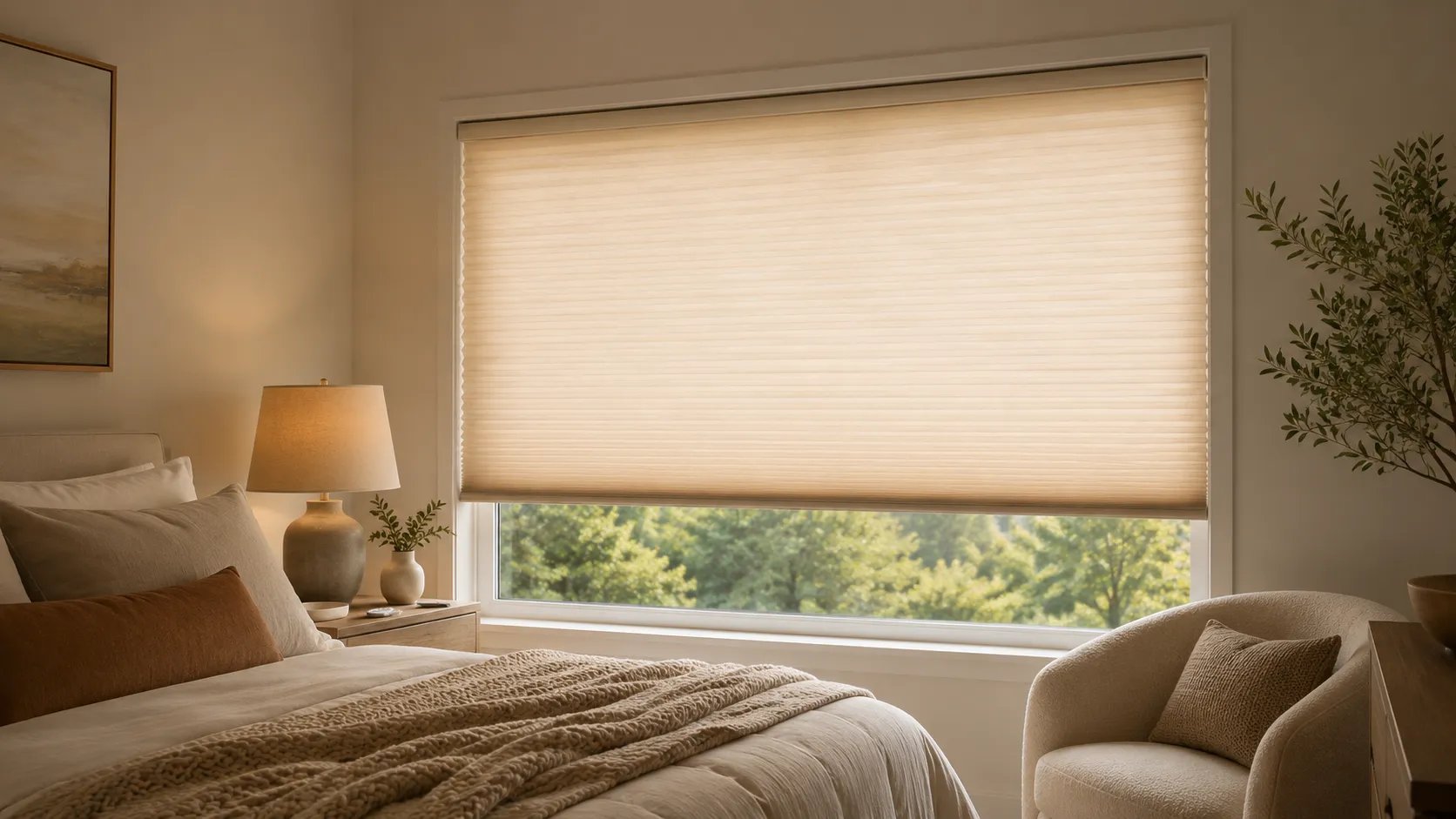
- Cellular (honeycomb) shades — the clear leader for insulation. Their honeycomb-shaped cells trap air in distinct pockets, and a well-fitted double-cell shade over a double-pane window can meaningfully raise the effective R-value of that window.
- Roller blinds with thermal or blackout backing — a solid, close-fitting fabric reduces radiant heat loss and blocks drafts better than a sheer or light-filtering fabric, though it won’t match a true cellular design.
- Zebra (dual-layer) blinds — good for light control and daytime solar gain management, but the alternating sheer/solid bands mean less of a sealed air pocket, so their insulating value is more moderate.
- Fit matters as much as fabric — an inside-mount installation that hugs the window frame closes off far more of the air gap around the edges than an outside-mount, loosely sized covering.
If insulation is the priority — a nursery over an unheated garage, a north-facing bedroom, an older single-pane window you haven’t replaced yet — cellular blinds are consistently the strongest performer of the three.
What Happened to Canada’s Greener Homes Grant?
This is where a lot of outdated advice online causes real confusion. The original Canada Greener Homes Grant — the well-known up-to-$5,000 federal rebate for home energy retrofits — closed to new applications in February 2024. The companion Greener Homes Loan has also wound down, and by 2026, Natural Resources Canada confirms the program is fully closed, with only previously-approved applications still being processed.
What replaced it is narrower. The Canada Greener Homes Affordability Program (CGHAP) is an income-tested initiative delivered through the provinces, aimed specifically at low-to-median income households, and it funds direct-install retrofits rather than a cash rebate homeowners apply for themselves. If you’re a typical homeowner outside that income bracket shopping for window coverings in 2026, this program most likely doesn’t apply to you at all.
Do Blinds and Shades Actually Qualify for Any of This?
Even when the original Greener Homes Grant was open, window coverings were never on the list of eligible retrofits in the same way full window and door replacements, insulation upgrades, and heat pumps were. Interior blinds and shades are treatments, not part of the building envelope itself, so federal and most provincial energy retrofit programs — both the closed grant and its narrower CGHAP replacement — are built around structural upgrades rather than window dressings.
That said, it’s worth checking two other avenues before assuming there’s nothing available:
- Provincial and utility programs — some utilities run their own efficiency incentive programs that occasionally include attachments like cellular shades, though eligibility and funding change often and vary by province.
- Landlord and condo corporation programs — larger multi-unit buildings sometimes bundle window covering upgrades into broader retrofit projects, which is a separate track from individual homeowner rebates.
For most homeowners, though, the realistic starting point is: budget for energy-efficient blinds as a home comfort upgrade you’re paying for directly, not a rebate-funded project.
Are They Still Worth It Without a Rebate?
Yes — the math still works even without government money attached. Unlike a window or heat pump replacement that can run into the tens of thousands of dollars, custom cellular or insulated roller blinds are a relatively low upfront cost with a payback period measured in a few winters, not decades. They also do double duty: the same honeycomb structure that traps warm air in January helps keep a west-facing room cooler in July, and a well-insulated window covering reduces the cold-draft feeling near a window seat or crib even before the savings show up on a bill.
If you’re weighing where to spend a renovation budget, energy-efficient blinds tend to be one of the fastest, least disruptive upgrades available — no contractor tear-out, no permits, and a measurable difference in comfort from day one.
Choosing the Right Energy Efficient Blinds Canada Winters Actually Call For
Zenith Shade builds each of its core product lines with insulation performance in mind, custom measured for a tight, draft-reducing fit. In a two-storey Ottawa home with a mix of south-facing and north-facing rooms, that usually means pairing cellular blinds on the coldest exposures with roller or zebra blinds elsewhere for a balance of insulation, light control, and budget:
- Cellular Blinds — honeycomb construction for the strongest insulating performance, ideal for bedrooms, nurseries, and older or single-pane windows.
- Roller Blinds — available with thermal-backed fabrics for a cleaner look with meaningful draft reduction.
- Zebra Blinds — a strong choice where adjustable daylight control matters as much as insulation.
- Motorized options across all three lines, so shades can be scheduled to close automatically at dusk in winter or during peak afternoon sun in summer, without you having to remember.
An accurate, inside-mount fit makes a real difference to insulation, which is why Zenith Shade offers in-home consultations in Ottawa and French-language support in Montréal — or start with the Window Shade Measuring Guide if you’d like to get a sense of the process yourself.
Frequently Asked Questions
Is the Canada Greener Homes Grant still available in 2026?
No. The original grant closed to new applicants in February 2024, and by 2026 Natural Resources Canada lists it as fully closed, with only previously submitted applications still being processed.
Do energy-efficient blinds qualify for any Canadian government rebate?
Generally no. Both the former Greener Homes Grant and its narrower replacement, the income-tested Canada Greener Homes Affordability Program, are built around structural retrofits — windows, doors, insulation, and heat pumps — rather than interior window coverings.
Which type of blind insulates best?
Cellular (honeycomb) shades consistently perform best, since their cell structure traps still air in distinct pockets between the glass and the room. A tight inside-mount installation improves performance further by reducing air leakage around the edges.
Are energy-efficient blinds worth the cost without a rebate?
Most homeowners see a payback measured in a few heating seasons rather than decades, and the comfort benefit — fewer drafts, less summer heat gain — starts immediately, well before any energy-bill savings accumulate.
Should I check for any other incentives before buying?
It’s worth a quick check with your electricity or gas utility, since some run their own efficiency incentive programs that occasionally include window attachments — though availability changes often and isn’t guaranteed.
Ready to Upgrade Without Waiting on a Rebate?
Zenith Shade designs custom Cellular, Roller, and Zebra Blinds built for Canadian winters and summers, with in-home consultations in Ottawa and French-language support in Montréal. Request a custom blinds quote or get in touch to talk through the best insulating option for your home.